Article

A Drowning Risk We Do Not Talk About Enough: Overseas-Born Australians

New analysis from Aquatots shows that overseas-born Australians are at a higher risk of drowning. With National Water Safety Day on December 1, 2025, we need to ask: Are we reaching the communities at the highest risk?

Key findings


  • Over the last 20 years, people born overseas have often made up a bigger share of drowning deaths than their share of the population. In the late 2010s, they were about 30% of the population but up to 40% of drowning deaths.

  • In the five years before COVID (2015-16 to 2019-20), overseas-born Australians drowned at a rate about 25% higher than the overall population. This occurred while the national drowning rate improved. It suggests that overseas-born communities did not benefit as much as those born in Australia.

  • From 2005-06 to 2023-24, there were 1,627 drowning deaths among people born overseas - over 30% of all drowning deaths in that period.

  • From 2013-14 to 2022-23, the average annual drowning rate was 1.04 deaths per 100,000 for Australian-born residents. For overseas-born residents, it was 1.30. For Nepal-born people, it was 2.48, and for China-born people, it was 1.98.


Australia loves water, but not everyone is equally safe. Our analysis of 20 years of drowning data shows a clear pattern. People born overseas are often carrying more than their share of the grief.

Chart 1

Chart 1 shows how the picture has changed over time. 


In the mid-2000s, overseas-born residents were about a quarter  of the population. They were also about a quarter  of drowning deaths. 


Over time, that changed. By the late 2010s, people born overseas made up roughly 30%  of Australia’s population. But in some years, they accounted for around 40%  of drowning deaths.


A five-year bracket analysis highlights this shift (2024-25 excluded, overseas-born drowning data is provisional):


  • 2005-06 to 2009-10: overseas-born people were about 27% of drowning deaths.
  • 2010-11 to 2014-15: overseas-born people’s share rose to about 29%.
  • 2015-16 to 2019-20: it jumped to over 36%, more than one in three deaths.
  • 2020-21 to 2023-24: the share sits at about 29%.


This raises an important question. Is this simply due to the growth of the overseas-born population, or are overseas-born Australians actually less safe in the water?


To answer this question, we look at deaths per 100,000 people per year,  the crude annual drowning rate. For much of the last 20 years, the rate for people born overseas has sat above the rate  for the population as a whole (see chart 2).

Chart 2

In the five years before COVID (2015–16 to 2019–20), the drowning rate for overseas-born Australians was about 25% higher than the national average. In some of those years, the ‘extra risk’ climbed close to 40%. 


For most of the period, the risk ratio (shown by the yellow dashed line in Chart 2) is at or above 1.0. This means overseas-born Australians were as likely, and often more likely,  to drown than the average Australian. 


Since COVID, the two lines have moved closer together. Overall drowning has gone up, and the gap between overseas-born and Australian-born has narrowed. But the long-term story is clear; for many years, overseas-born Australians - including many culturally and linguistically diverse (CALD) communities were more likely to die once they entered the water.


The CALD communities cover many different communities. We focused on three large migrant communities: people born in China, India, and Nepal.


In 2005, the Nepal-born population in Australia was about 3,800. By 2024, it was around 197,800, more than 50 times larger. Over the same period, the India-born population grew by more than fivefold,  and the China-born population by more than threefold.


We used ten years of  Royal Life Saving National Fatal Drowning Database Dashboard data (2013-14 to 2022-23) and population figures from the Australian Bureau of Statistics. We calculated average annual drowning rates per 100,000 people and compared different groups (see chart 3).

Chart 3

Two things stand out from chart 3: 


  • People born in Nepal and China seem to have a higher risk of drowning. This risk is greater than the average for those born overseas and for the Australian-born population. 
  • People born in India have a lower crude rate, but India and Nepal together still account for around seven drowning deaths a year on average.


Across this time period (2013-14 to 2022-23), there were 933 drowning deaths among people born overseas. 181 of these involved people born in China, India, or Nepal, almost one in five overseas-born drowning deaths.

What this means for a drowning-free Australia


This study doesn’t explain all the reasons for the numbers. But it clearly shows that if Australia aims to reduce drowning deaths by half, CALD communities need to be included.


We know that overseas-born Australians face a higher drowning risk, it's time for specific action:


  • Make swimming lessons more affordable and culturally safe.
  • Offer water safety information in multiple languages.
  • Listen to CALD communities about the barriers they face and the support they need.


Recognizing these patterns and admitting the gaps is the first step to real progress. It’s key to a drowning-free nation where no family is left behind.

Methodology & Data Notes


Data Sources


  • NATIONAL DROWNING REPORT, Royal Life Saving Australia, several years
  • Royal Life Saving National Fatal Drowning Database Dashboard
  • 34090DO001_2024 Australia's population by country of birth 2024, Estimated resident population by country of birth - as at 30 June, 1996 to 2024, Released at 11:30 am (Canberra time) 30 April 2025, Australian Bureau of Statistics
  • A 10 YEAR NATIONAL STUDY OF OVERSEAS BORN DROWNING DEATHS, 2005/06 to 2014/15, Royal Life Saving Australia
  • Drowning Among Multicultural Communities in Australia, AN UPDATE: 2013/14 TO 2022/23, Royal Life Saving Australia


Formula


  • Crude drowning rate 

       (raw death count in the year/population of the year) * 100,000

  • Risk Ratio

       Overseas-born drowning rate​/Australian-born drowning rate

       A value above 1 means overseas-born Australians face higher drowning risk.


Note


  • 'Overseas-born' is not the same as 'CALD', our analysis focuses on country of birth
  • We used the Royal Life Saving National Fatal Drowning Database Dashboard to analyse the annual total drowning death counts. The dashboard reports 316 deaths for the 2023-24 period. National Drowning Report 2024, Royal Life Saving Australia shows 323. The difference does not affect any trend or conclusion in the analysis.

Using our work


Aquatots Research & Data Team's work is meant to be shared and used widely. You do not need to seek our permission to reuse our article, charts, data, you just need to provide credit - http://www.aquatots.com.au/a-drowning-risk-we-do-not-talk-about-enough:-overseas-born-australians

About Aquatots

Key takeaways at a glance

Swimming through winter is a crucial part of your child's progression to becoming safer in and around an aquatic environment.


We understand that parents can sometimes find it hard to continue or have heard that swimming through the cooler months will make your child sick. As long as the pool where your child learns has warm water and heats the air temperature there should be no reason why a child should stop their progression


Aquatots has a few tips on why and how you can continue ensuring your child has continuation of this life saving skill


WHY?

Swimming through winter will ensure your child continues to build on their swimming skills and are prepared for the warmer weather. Unfortunately drowning does not discriminate between the seasons and if you think its cold here always remember children in Sweden also learn to swim.


Swimming through winter will mean your child secures their position in the program for warmer months and are ready for summer swimming


Another crucial reason to try and continue your child swimming through winter will be their growth. When a child grows their center of buoyancy will change and if they have stopped the progression they will need to relearn their center of buoyancy. This will put some children back a few steps and will make them feel uneasy or awkward in the water, as they will be unbalanced for a while. If a child continues to swim through this period the adjustment period is much quicker as it is a continuation rather than a relearn.


Strengthening immunity

Swimming also builds your child's immune system and strengthens their body and lungs meaning if your child is to get sick their healthy body will reduce the recovery time and number of times they will get sick through the cooler months.


Children and babies unfortunately will get sick from other sick people. To help them fight off these nasty bugs Aquatots recommends

  1. Ensuring your child has a well rounded diet and enough sleep
  2. Keep yourself healthy
  3. Dress your child (and yourself) completely before exiting the buildings. This includes warm hats and shoes
  4. Add a probiotic to your child's daily diet
  5. Continue to be active throughout the cooler months. Exercise promotes healthy bodies and healthy minds
  6. Flu shots might be an option for children old enough and parents to ward off most of the nasty ones


Dry skin, eczema & other skin problems

Dry skin and eczema can flare up through the cooler months due to heating and other environmental factors. Our recommendation to assist with this would be


  1. Ensure you put a barrier cream on your child before they enter the water
  2. Once your class has finished rinse and wash your child in Luke warm water with non soap products
  3. Re cream your child with quality cream or oil. We suggest coconut oil, moo goo or itchy baby products. . Please also remember to cream your baby/child before they go to bed each night as this is when moisturiser is best absorbed
  4. Wash your child's (& your own) swim wear regularly to avoid bacteria breading on the material

To avoid the spread or chance of spreading some skin conditions it is important to use your own clean towel. Do not share towels
Ear infections, grommets and other ear issues

If your child has grommets or is susceptible to ear infections there are ways your child can continue to learn how to swim and survive. To continue your child's swimming progression Aquatots recommends


  1. Ear putty (child specific putty can be purchased from our swim shop). Ear putty must be used correctly for it to stay in and seal the ear cavity
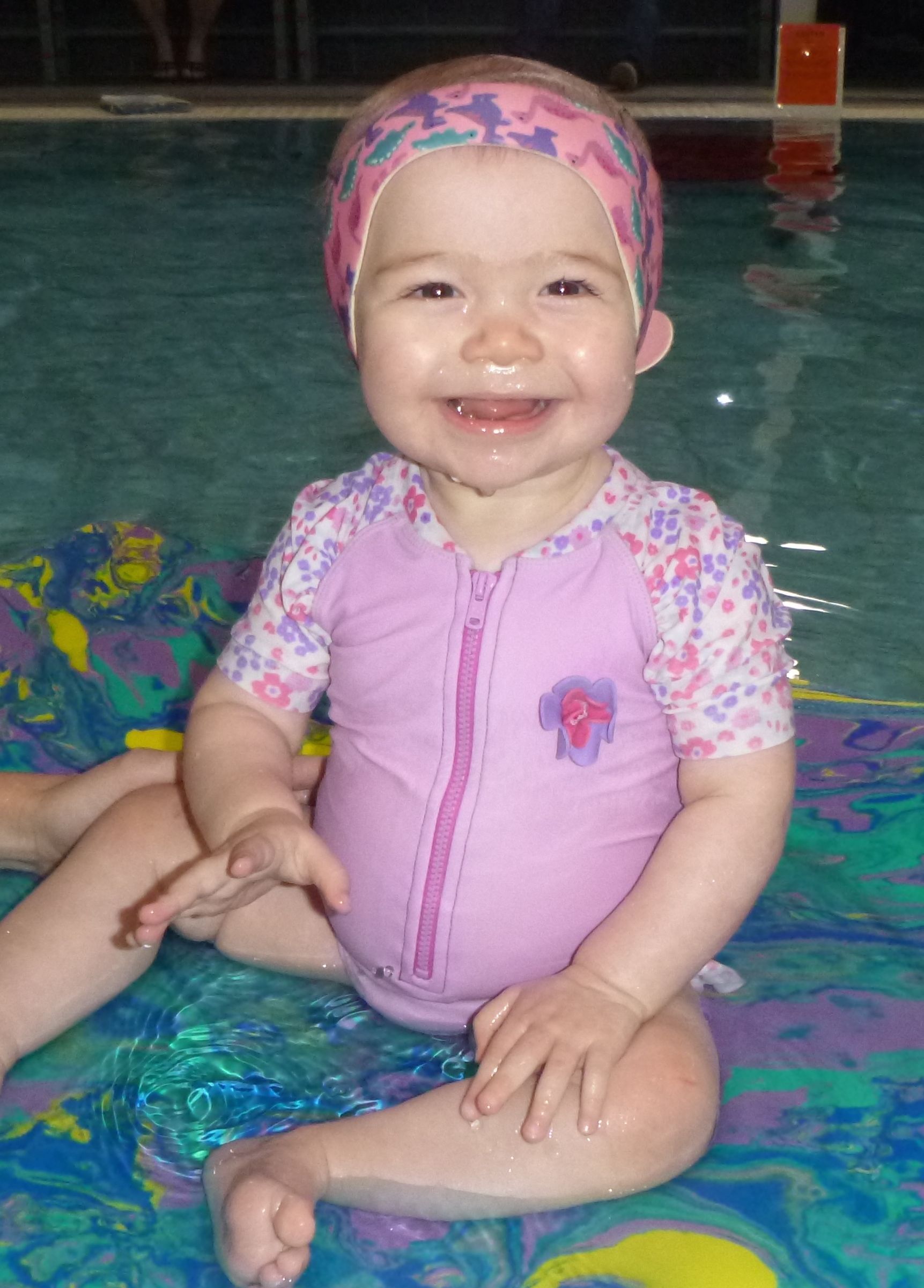
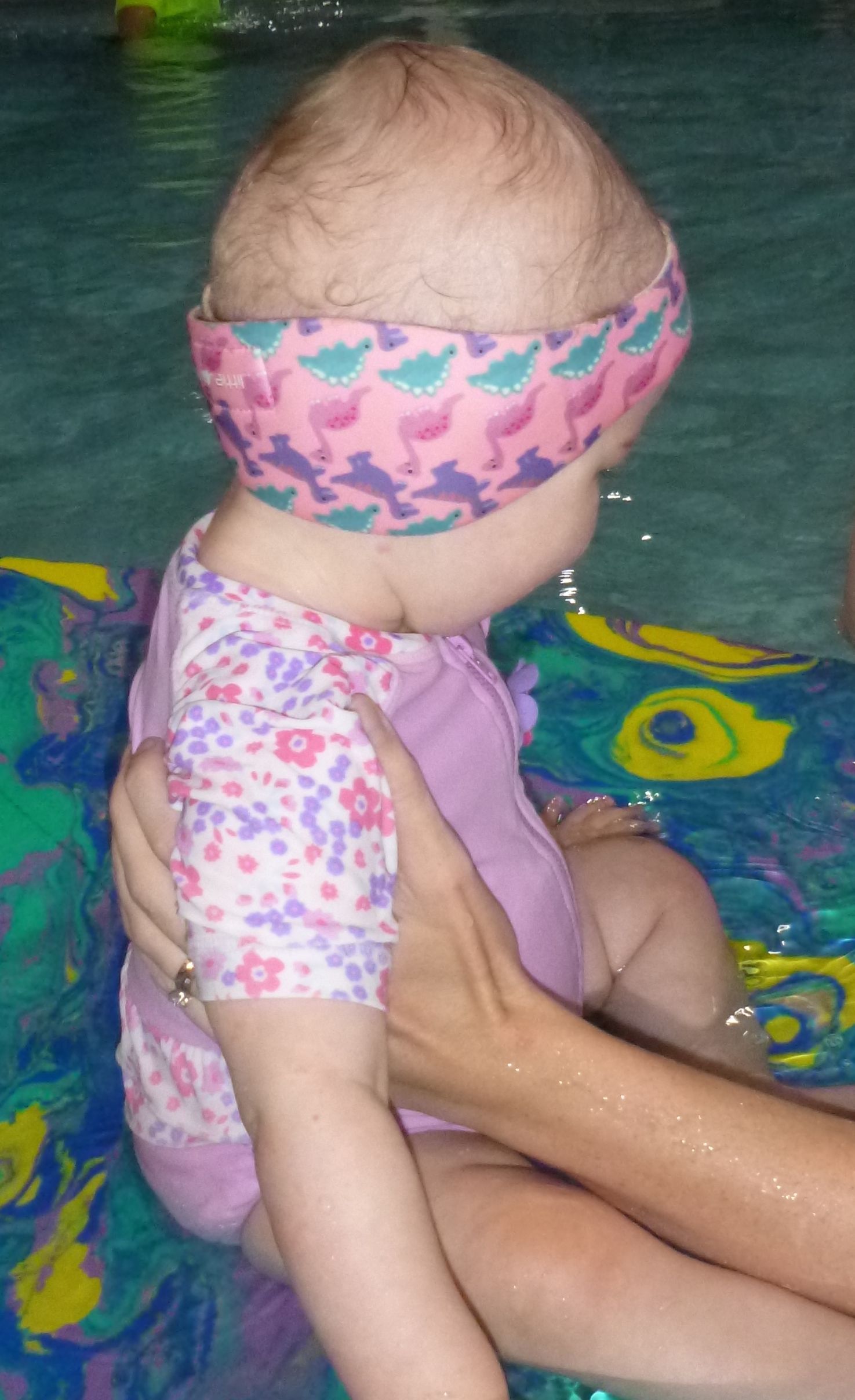
  2. Over the ears we also recommend a head band (correct neoprene ones can be purchased from our swim shop or online)
  3. The swim cap can either be placed over or under the head band
  4. Only use the ear equipment if your child has grommets or continuously is getting ear infections (2 or 3 in 1 month).
  5. If this is not the case please DO NOT use the ear equipment allow the ear to drain naturally
  6. SwimSEAL is a new product we offer at our shop which is an ear spray for the ear before entering the water. This spray coats the ear canal and repels the water from entering the canal. More information on this awesome product can be found on their website.


Ensure the pool your child learns in not only heats their water (30 or above) but the air temperature as well.


Babies under the age of 1 usually will not shiver when they are cold you must monitor the colour of their lips, if they turn blue you must exit immediately to avoid the risk of hypothermia


When children & babies get cold their brains shut down messages to the extremities, it is extremely hard to teach a child/baby to swim if their brain is not communicating with their arms and legs.


A warm comfortable centre will not only maximise your child's swimming enjoyment & learning capability but will help with keeping the bugs at bay


Exclusions from lessons and our swim centres

We really try hard to keep our pools as healthy as possible and would appreciate your help on the matter. If you or your child is sick please do not attend the centre. This will help in keeping our centres healthy and ensure your child's instructor can keep up a consistent attendance.


Exclusions are as follows

  1. If your child looks or is acting out of sorts or has visible signs of being unwell
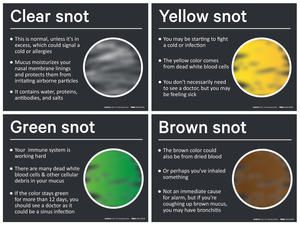
  2. If you child has green, white or yellow snot (a snot chart has been included for your reading pleasure)
  3. Any unidentified rash must be cleared by a medical practitioner before the child can attend the class
  4. Open wounds are not to be put in the water
  5. A 48-hour exclusion period applies to diarrhoea and vomiting. Children are not to attend until 48 hours after the last loose stool or vomit
  6. All other exclusions follow the child care and school guidelines which can be found on the following site https://www.nhmrc.gov.au/
7 Simple Dryland Exercises For Strong Swimming
By Callum Gracie August 11, 2025
Build power, stability, and flexibility with these 7 dryland exercises for strong swimming. Boost speed, endurance, and technique in the pool.
Girl in swim gear, pink cap, smiling, holding award, with man giving peace sign at poolside.
By Callum Gracie August 11, 2025
From training habits to mindset, explore essential dos and don’ts for competitive swimming. Support your child’s journey with expert Aquatots tips.
Show More